Buy Augmentin and Amoxicillin Online: Best Prices and Fast Delivery
Pharmacy costs can feel like a financial minefield. You might start by looking for a standard prescription, only to find a price tag that is much higher than expected. Understanding the price gap between different antibiotic options is the first step toward smarter spending.
The difference between a brand-name drug and a generic one is often significant. This isn’t just about the name on the box; it is about the chemistry inside and how that chemistry is marketed.
The math is simple. Generic versions of amoxicillin are designed to be bioequivalent to the originals. They perform the same function in your body without the “luxury tax” associated with big-brand names.
Consider the “Amoxil” factor. Amoxil is the well-known face of this penicillin-group antibiotic, but being a household name comes with a premium. If you choose the branded version, you are paying for that legacy and the research behind its development decades ago.
A generic amoxicillin tablet often costs a fraction of that price. Switching to a generic can drop prices by 50% to 80%. It is similar to choosing between a designer label and a high-quality store brand; the core function remains exactly the same.
In terms of raw numbers, a single 500 mg generic tablet can sometimes be found for as little as $0.39. When you add those savings up over a full ten-day course, the difference can pay for a grocery trip or several cups of coffee.
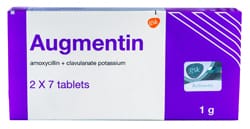
Things get more complex with Augmentin. Unlike standard amoxicillin, Augmentin is a combination drug. It contains two ingredients working together to fight stubborn bacteria.
Augmentin carries a higher price tag because it includes clavulanate potassium. This second ingredient protects the amoxicillin from being destroyed by the very bacteria it is trying to kill. It is a tactical addition, but it isn’t cheap.
Because of this added complexity, an 875-125 mg Augmentin tablet naturally costs significantly more than a plain amoxicillin tablet. You are paying for a specialized tool rather than a standard one, depending on whether your specific infection requires that extra firepower.
Here is how these typical price points compare across different formulations and quantities:
| Product Type | Dosage Strength | Quantity | Estimated Cost |
| Generic Amoxicillin | 500 mg | 30 Tablets | $12.50 |
| Branded Amoxil | 500 mg | 30 Tablets | $35.00 |
| Augmentin (Combo) | 875-125 mg | 20 Tablets | $55.00 |
| Generic Augmentin | 875-125 mg | 20 Tablets | $38.00 |
If you need a refill, don’t let high prices stop you from getting your medication. The digital age has opened doors to savings that traditional pharmacies often cannot match. Online pharmacies frequently operate with lower overhead, passing those savings to you.
You can shave even more off your total by hunting for promotional codes. Many reputable online providers offer a 15% discount on your first order. This small step can have a noticeable impact on your final checkout total.
When browsing, look for codes like AMOX15. Applying these at checkout can often secure free shipping or direct percentage discounts. It is much more impactful for your health budget than a standard coupon.
Always ensure you are using a licensed, reputable pharmacy. You want the savings of the internet without the risks of unverified sources. Keep your prescription ready, as legitimate online providers require it to ensure your safety.
The digital marketplace for antibiotics can be confusing. You might start looking for a simple way to save money, only to find a suspicious website that looks like it was designed in the late nineties. You must distinguish between a legitimate pharmacy and a storefront selling counterfeit goods.
Finding reputable international suppliers involves some detective work. India has long been a powerhouse in the pharmaceutical world, producing high-quality generics at a fraction of the cost seen in Western nations. Canadian pharmacies are also famous for strict safety standards while offering much more competitive pricing than the United States. Both regions are primary hubs for global distribution.
When scouting for a provider, look for a history of reliability. A pharmacy that has been around for decades, much like the established manufacturers in Mumbai, is a safer bet than a pop-up site. You want a vendor that treats your health with seriousness. Do not settle for the cheapest option if the source is a mystery.
The biggest difference between buying from a US-based pharmacy and an overseas supplier involves “red tape” and the price tag. US pharmacies are convenient and operate under strict FDA oversight, but they are often the most expensive. You are paying a premium for domestic shipping and immediate regulatory compliance within your own borders.
Overseas suppliers, particularly those in India or Canada, offer a way to bypass high domestic overhead costs. This is why many people turn to international markets when looking for Augmentin 875-125 or other essential antibiotics. The savings can be massive, often reducing your total bill by 50% or more compared to your local drugstore.
There is a trade-off regarding speed and logistics. While a US pharmacy might deliver in two days, an international order might take a week or two. You have to weigh the immediate convenience of a domestic order against the significant long-term savings offered by an overseas provider.
Perform a thorough inspection before you hand over your credit card details. A legitimate pharmacy should always be able to provide proof of their licensing. If a website refuses to show credentials or looks like a “ghost town” with no contact information, walk away. A real business wants you to know they are real.
Check for these specific red flags:
Always verify if the pharmacy is part of a recognized regulatory body. Many reputable international vendors clearly state their compliance with international manufacturing standards. If they are a major player, like the well-known labs in India, they will often have a transparent presence online that reflects their standing in the global medical community.
Once you find a provider that checks your boxes, the checkout process should be easy. Most legitimate international pharmacies handle modern payment methods, including Visa and MasterCard. It is a straightforward process, much like buying a book from a major online retailer.
Ensure the connection is secure when entering your details. Look for the padlock icon in your browser’s address bar; this indicates that your sensitive financial data is being encrypted. Using a credit card is generally safer than a direct bank transfer because most major banks offer fraud protection for online transactions.
If you encounter friction during payment, do not panic. Sometimes international transactions trigger a fraud alert with your bank. It is a good idea to notify your credit card company that you are making an international purchase. This simple step can prevent your transaction from being declined mid-checkout.
Shipping an order across the ocean is a journey. You should always ask about the estimated delivery window before finalizing your purchase. Most reputable providers offer various tiers of shipping, from standard postal services to premium, tracked courier options. Tracking is essential for international logistics.
Customs can sometimes slow things down. Depending on your country’s laws, you might be required to pay a small import duty or tax upon arrival. While many small orders pass through without issue, be prepared for the possibility of a slight delay or an extra fee.
To minimize headaches, try to consolidate your orders. Instead of ordering small batches every week, buying a larger supply at once can be more cost-effective and reduces the number of times you deal with customs. It is like buying in bulk at a warehouse club; it requires more upfront planning but saves time in the long run.
Antibiotic administration requires precision and clinical judgment. Taking the wrong amount might mean you are fighting a losing battle against bacteria, while taking too much can place unnecessary strain on your body. The dose must be tailored to the specific infection you are facing.
For common respiratory issues like acute sinusitis or otitis media, adults typically fall into a standard range. For many sinus infections, a common approach involves 500 mg every eight hours or 875 mg twice a day. This ensures the medicine maintains a steady presence in your bloodstream to keep bacterial growth at bay.
If the infection is more severe, such as pneumonia, the dosage might climb higher. Doctors often prescribe 1 gram three times daily to ensure the drug reaches effective concentrations in the lungs. Always follow the specific roadmap laid out by your healthcare professional to ensure the infection is truly eradicated.
For complex conditions like H. pylori, the strategy changes. This often requires a “triple therapy” approach, where amoxicillin is paired with medications like clarithromycin and a proton pump inhibitor. In these scenarios, the dose is typically 1 g taken twice daily for 10 to 14 days to ensure the stomach bacteria are wiped out.
Urinary tract infections (UTIs) also require a focused approach. For uncomplicated cases, a regimen of 250 mg to 500 mg three times daily is frequently used. The goal is to clear the bladder of pathogens quickly to prevent the infection from traveling toward the kidneys.
When the patient is a child, the math is critical. For those under 12, doses are calculated based on body weight to ensure safety and efficacy. This weight-based method prevents under-dosing, which is dangerous in pediatric care.
For acute issues like ear infections or pneumonia in children, a common guideline is 80–90 mg per kilogram of body weight per day, divided into two doses. For example, if a child weighs 20 kg, they might require 900 mg twice daily. This precision is vital because a child’s metabolism processes medication differently than an adult’s.
For milder infections, such as simple skin issues or UTIs, the dose is often lower, ranging from 20 to 45 mg/kg per day. It is essential to use an oral suspension for these younger patients to ensure the dose is measured accurately. Always shake the bottle well before every use to ensure the medicine is evenly distributed.
Patients with kidney issues face a different set of rules because the kidneys clear the medication from the body. If kidney function is impaired, the drug can linger too long and potentially reach toxic levels. It is like a partially blocked dam; the medicine needs careful management.
If a patient’s creatinine clearance falls between 10 and 30 mL/min, doctors often suggest extending the time between doses, perhaps taking 250–500 mg every 12 hours instead of every eight. If function is lower than 10 mL/min, the dose might only be required once every 24 hours to prevent accumulation.
For those undergoing regular hemodialysis, timing is paramount. Because the dialysis machine can filter the antibiotic out of the blood, a supplemental dose is often required immediately after treatment. This ensures the body has enough medication to keep fighting between sessions.
One of the most dangerous mistakes is stopping medication simply because you start feeling better. It is tempting to quit once the fever breaks, but that is often when the strongest bacteria are still present. Stopping early is like leaving a fire smoldering; it can flare up again much stronger.
This phenomenon is the basis of antibiotic resistance. When you stop a course prematurely, the weak bacteria die off, but the survivors are the ones that have learned how to withstand the drug. These survivors multiply, creating a more dangerous strain that the original antibiotic might not be able to touch.
You must complete the full course exactly as prescribed, even if you feel like you have regained your strength. For more detailed clinical information, you can visit https://www.canadadrugsonline.com/DrugMoreInfo133.aspx.
Imagine trying to unlock a door, but the intruder has changed the locks. This is what happens when bacteria evolve to fight off standard antibiotics. While plain amoxicillin works for many common infections, certain bacteria have developed a “shield” to neutralize it. This is when an upgrade to Augmentin becomes necessary.
The secret in Augmentin is clavulanate potassium. Think of amoxicillin as the soldier and clavulanate as the scout who disarms the enemy’s defenses. Many bacteria produce an enzyme called beta-lactamase, which acts like scissors, snipping the amoxicillin molecule apart before it can destroy the bacterial cell wall. Without that extra help, the antibiotic is fighting with one hand tied behind its back.
By pairing amoxicillin with clavulanate, we effectively disable those protective enzymes. This allows the amoxicillin to reach its target unimpeded. It is not just about adding more medicine; it is about ensuring the medicine has the chance to do its job without being sabotaged.
For more information on how these combinations work, you can explore the details at https://www.blinkhealth.com/augmentin?srsltid=AfmBOophNgoHKe0A8juNzq62lmVMfNuaBsFZ8U4jcZ1sEvtepBhNAPDs.
Not every infection is created equal, and choosing the wrong tool can lead to a stalemate. Simple skin infections caused by sensitive bacteria might respond well to plain amoxicillin. However, if the infection is deep or shows signs of a more stubborn strain, a doctor might reach for the “big guns” to ensure the bacteria don’t stand a chance.
Pneumonia is a prime example where the stakes are high. When dealing with community-acquired pneumonia, especially in areas where resistance is climbing, relying on plain amoxicillin can be a gamble. If the specific strain of bacteria is a known producer of beta-lactamase, the treatment might fail, leaving the infection to linger and potentially cause lung damage.
The decision often comes down to efficacy. While amoxicillin is excellent for straightforward cases, Augmentin is the preferred choice for more complex, “aggressive” scenarios. It is the difference between using a standard key and a master key when facing a complex locking mechanism.
To help distinguish between these needs, consider this comparison of typical clinical applications:
| Infection Type | Likely Amoxicillin Use | Likely Augmentin Use |
| Simple Skin Abscess | Common for sensitive strains | Preferred if resistant strains suspected |
| Sinusitis/Otitis Media | Standard for many cases | Used if beta-lactamase is suspected |
| Pneumonia | May be insufficient in high-resistance areas | Often preferred for complex cases |
How do you know if your specific infection requires the extra firepower of a combination drug? Usually, a clinician decides this based on several factors, including the “local weather” of bacterial resistance in your specific geographic area.
If you live in a region where resistance rates are high, your doctor might bypass standard amoxicillin and go straight to Augmentin. This is proactive medicine. They are predicting that the bacteria you are carrying is likely to have those “protective shields” up, so they provide the disarming agent (clavulanate) from the first dose.
Other indicators include the severity of your symptoms and the location of the infection. An infection deep within the tissue or one that is spreading rapidly often warrants the broader coverage provided by a combination. It is better to use the right tool for the job the first time rather than trying to fix a failed treatment later.
The impact of bacterial resistance is the driving force behind these clinical choices. As bacteria continue to evolve, the gap between what “simple” antibiotics can do and what “combination” therapies can achieve continues to widen.
Taking a powerful antibiotic can be like inviting a heavy-duty cleaning crew into your house. They get the job done, but they might leave a mess behind. It is common to experience some gastrointestinal issues as your body reacts to the medication and the shift in your internal microbiome.
Many people report feeling nauseous or dealing with an upset stomach shortly after starting. To keep things running smoothly, avoid taking your dose on an empty stomach. Pairing your medication with a hearty meal can act as a buffer, protecting your stomach lining and reducing that unpleasant feeling.
If you deal with loose stools or diarrhea, stay vigilant. Maintaining hydration is critical; think of it as replenishing the water levels in a reservoir. Sipping on electrolytes or clear broths can help keep your system balanced while the medicine works against the infection.
Most people tolerate these drugs well, but allergies are a real possibility. An allergic reaction can range from a mild itch or a slightly runny nose to a life-threatening emergency. You must know the difference between a “nuisance” and a “crisis.”
If you notice skin redness, a rash that looks like welts, or swelling around your eyes or lips, contact your doctor. These are clear signals from your immune system that it views the medicine as an intruder. It is better to be cautious than to brush off a warning sign.
Anaphylaxis is the “red alert” scenario. This is a sudden, severe reaction that can make breathing feel like you are inhaling through a tiny straw. If you experience swelling of the throat, a rapid pulse, or feel like you might pass out, call emergency services immediately. In these moments, every second counts.
For more technical details on how these medications interact with the body’s immune response, you can review the clinical data at https://www.shorter.edu/antibiotic-from-the-penicillin-group/.
Antibiotics should not be used on a whim. When used too frequently or for too long, we risk creating a “superinfection.” This is a secondary problem caused by the antibiotic itself. By killing the “bad” bacteria, the medicine might also wipe out the “good” bacteria that keep you healthy.
This imbalance can allow opportunistic invaders, like fungi or certain resistant bacteria, to take over. A common example is oral or vaginal candidiasis, often referred to as thrush or a yeast infection. It is a classic case of the “good guys” being sidelined, leaving the door open for something else to thrive.
Beyond immediate side effects, there is the shadow of antibiotic resistance. This is a real-world consequence of improper use. When bacteria are exposed to sub-lethal doses or unnecessary courses, they learn how to fight back, making future infections much harder to treat.
Certain individuals need to walk a much narrower tightrope. For pregnant women, the priority is balancing maternal health with fetal safety. While many amoxicillin-based drugs are considered relatively safe, they should only be used under strict medical supervision to ensure the benefits outweigh the risks.
Patients with compromised immune systems must also exercise extreme caution. Because their natural defenses are already low, a secondary infection following antibiotic use can escalate much faster than in a healthy individual. They should be monitored closely by a healthcare professional throughout the treatment.
If you fall into a high-risk category due to pregnancy, age, or chronic illness, never skip a dose or change your schedule without talking to your provider. Precision is vital when your body’s defenses are already stretched to their limit. Always follow the specific guidance tailored to your medical profile.
Knowing when to stay home and when to go to the hospital is a crucial skill. Most side effects, like a mild stomach ache or a headache, can be managed with rest and hydration. However, certain symptoms are non-negotiable red flags that require professional intervention immediately.
Seek medical attention immediately if you experience any of the following:
If you feel like something “just isn’t right” and your symptoms are worsening, trust your gut. It is always better to have a doctor tell you it is nothing than to ignore a brewing emergency. Your safety should always be the top priority when managing any prescription.