Buy Isotretinoin Online: Order Isotroin for Acne Treatment
Navigating the world of advanced acne treatments can feel like walking through a dense fog without a compass. When doctors prescribe isotretinoin, they aren’t just handing over a pill; they are initiating a complex biological journey. Because every skin type reacts differently, the way the medication is measured and delivered is paramount for success.
You might find yourself staring at a prescription, wondering why the numbers don’t seem to add up at first glance. It is not a one-size-fits-all situation. The goal is to hit a specific threshold of medication in your system over several months to ensure the acne doesn’t make a comeback once you stop.
Understanding the nuances of these pills is the first step toward clear skin. Whether you are looking for specific brands or generic alternatives, knowing the math behind your treatment helps you manage expectations. Let’s dive into the specifics of how these various strengths and quantities actually function.
Isotretinoin comes in several tablet strengths to allow for precise titration. Most patients start on lower doses, such as 5mg or 10mg, to see how their body handles the initial side effects. It is a bit like dipping your toes into a pool before jumping into the deep end.
As your tolerance improves, or if your dermatologist requires a higher systemic load, the dosage may climb to 20mg, 30mg, or even 40mg per day. This escalation is carefully monitored to ensure you are getting the therapeutic benefit without overwhelming your liver or skin moisture levels.
The core concept that governs this entire process is the “cumulative dose.” This is the total amount of the drug your body receives over the entire duration of the treatment. Think of it like a savings account; you have to deposit a specific total amount of “medicine” before you can truly say you have achieved the goal of long-term remission.
For severe, cystic acne, doctors typically aim for a total cumulative dose of 120 to 150 mg per kilogram of body weight. If you fall short of this target, there is a higher risk of the acne returning. It is a marathon, not a sprint, requiring patience and strict adherence to the daily schedule.
When you talk to friends or search online, you will hear the name “Accutane” tossed around constantly. In many ways, it has become a generic trademark, much like how people say “Kleenex” instead of facial tissue. However, in the pharmaceutical world, the distinction between brand names like Isotroin and generic versions is significant.
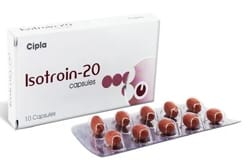
Isotroin is a specific brand-name formulation that some patients swear by. They often claim it is easier on the stomach or more consistent in its absorption. While the active ingredient—isotretinoin—is identical, the “inactive” ingredients, such as binders and fillers, can vary slightly between manufacturers.
Generic options are generally the go-to for many because they are much more budget-friendly. For a treatment that can last many months, the cost difference can be quite staggering. Most clinical studies suggest that generics are just as effective as the brand name, provided they meet strict bioequivalence standards.
Choosing between them often comes down to your personal chemistry and your wallet. Some people find that switching from a brand to a generic causes a slight flare-up, while others see no difference at all. Always consult with your provider to see which path is best for your specific biological makeup.
Review the pricing and quantity options below to help plan your treatment journey.
| Package Plan | Total Pills | Typical Duration | Estimated Cost |
|---|---|---|---|
| Starter Pack | 30 Pills | 1 Month | $45 |
| Standard Cycle | 60 Pills | 2 Months | $85 |
| Extended Care | 120 Pills | 4 Months | $160 |
| Full Course | 180 Pills | 6 Months | $230 |
When you are ready to buy isotretinoin online, you will likely be faced with a choice of how many pills to order at once. This isn’t just about convenience; it’s about the rhythm of your treatment. Selecting the right amount can prevent gaps in your medication, which is critical for maintaining that cumulative dose.
A 30-pill supply is a good way to test the waters if you are nervous about side effects. On the other hand, many patients opt for 90 or 120 pills to ensure they don’t run out during travel or busy work months. It is much better to have a surplus than to face a sudden shortage.
If you are looking for professional guidance on how to manage these prescriptions, visiting a specialized clinic is a wise move. You can find more information on professional options through Accutane online to understand the clinical landscape better.
Remember, your dosage is not a suggestion; it is a strictly measured medical requirement. Always keep a log of your daily intake to ensure you are staying on track toward your total cumulative goal. Consistency is the secret ingredient to achieving the clear skin you deserve.
Navigating the financial landscape of long-term dermatological care can feel like trying to read a map in a storm. When you decide to buy isotretinoin online, the upfront price tag is only the beginning of the story. You must look beyond the sticker price to truly understand what your bank account will experience over several months.
Understanding the math behind your prescription is vital for anyone managing a strict budget. It is not just about finding the lowest number on a webpage; it is about calculating the true cost of a successful skin transformation. Small differences in unit pricing can snowball into significant savings or unexpected drains on your resources.
Many patients find themselves caught between the convenience of small monthly refills and the economy of bulk ordering. While the latter seems daunting at first glance, it often provides the most stability. We have broken down the numbers to help you decide which route makes the most sense for your lifestyle and your wallet.
When comparing different quantities, the “price-per-pill” is the most honest metric you have. A 30-pill bottle might seem cheap at $45, but it is actually quite a heavy lift on a monthly basis. If you are looking at a full six-month journey, those individual monthly costs add up like a slow leak in a tire.
Conversely, the 180-pill bundle is the heavy hitter of the group. While the $230 total might feel like a large sum to drop at once, you are essentially getting a discount for your commitment. It is like buying in bulk at a warehouse club; the initial investment is higher, but the long-term relief is palpable.
Let’s look at how the math actually shakes out when you peel back the layers. The difference between buying month-to-month and buying the full course is not just a few cents; it is a meaningful chunk of change that could be better spent on moisturizer or sunblock.
| Quantity | Total Cost | Cost Per Pill | Savings Note |
| 30 Pills | $45 | $1.50 | Standard baseline |
| 180 Pills | $230 | $1.27 | Best Value |
The math doesn’t lie: moving from a 30-pill supply to a 180-pill supply reduces your per-pill cost by roughly 15%. For many, this is the difference between a stressful monthly expense and a manageable, planned-for medical cost. It is a smart move for anyone aiming for the cumulative dose required for lasting results.
Don’t let a low base price lure you into a false sense of security. Many online pharmacies play a bit of a shell game with their pricing. You might see a price that looks like a steal, only to find that the “final checkout” screen includes a laundry list of extra fees that catch you off guard.
Shipping fees can be a sneaky culprit, especially if you require expedited delivery to ensure you never miss a dose. Similarly, some providers tack on pharmacy handling fees or specific processing charges at the very last second. Always, and I mean always, look at the “all-in” price before you hit that confirm button.
Taxes are another variable that can change the math depending on your location. While some states may have different regulations, it is wise to assume you will be paying a bit extra for the privilege of having your medication delivered to your doorstep. It is better to be prepared for the worst than surprised by the bill.
If you find yourself confused by the complexities of pharmaceutical pricing or coverage, it is worth seeking professional insight. You can learn more about the clinical standards and management of these medications by visiting the PAP Society to ensure you are making informed decisions for your health and your finances.
Navigating the digital pharmacy landscape can feel like walking a tightrope without a safety net. While the convenience of ordering from your sofa is undeniably tempting, the risks involved in buying high-potency medication can be steep. You want results for your skin, not a headache from a fraudulent transaction.
It is vital to distinguish between a legitimate digital pharmacy and a shady storefront lurking in the dark corners of the internet. Reputable providers operate under strict regulatory frameworks and maintain transparent communication with their patients. They aren’t just selling pills; they are providing a regulated medical service that prioritizes your safety.
Unverified sources often promise impossible deals or bypass the necessity of a prescription entirely. If a website claims you can skip the doctor and get straight to the checkout, run for the hills. These sites are often fronts for counterfeit goods that might contain nothing more than chalk or dangerous impurities.
A legitimate service will always require a valid prescription and often includes a consultation phase. They should provide clear information about their physical location and licensing. If a site looks like it was designed in the late nineties and has no contact information, consider that a massive red flag.
Before you hand over your credit card details, take a moment to play detective. A legitimate digital pharmacy should have a clear, verifiable process for reviewing your medical history. They won’t just take your money and vanish; they will engage in a professional dialogue regarding your health needs.
Check for signs of official accreditation. Look for digital seals from recognized pharmacy regulatory bodies in your region. If a site refuses to provide a physical address or a working phone number, they are likely playing a shell game with your personal data and your hard-earned cash.
You should also look for reviews on independent platforms, not just the testimonials plastered on their own homepage. Real patients will tell you if the service is legitimate or if the pills arrived in a box that looked like it had been through a blender. Transparency is the hallmark of a real professional.
Always ensure the website uses secure encryption for all transactions. Look for the padlock icon in your browser’s address bar. If you are uncomfortable with the security measures, do not proceed. Your financial security is just as important as your skin health when navigating these online marketplaces.
Counterfeit medication is a shadow industry that can be incredibly difficult to spot at first glance. Sometimes, the packaging looks identical to the real deal, making it a dangerous game of “spot the difference.” You shouldn’t have to be a chemist to ensure you are getting what you paid for.
Use this checklist to evaluate your shipment when it arrives at your doorstep:
If anything feels “off,” trust your gut. If the pills look different from your previous batch, do not ingest them. It is far better to waste a few weeks of time than to ingest an unknown substance that could cause severe adverse reactions or systemic toxicity.
Isotretinoin is not a casual skincare product; it is a powerful medical intervention that requires a steady hand. Attempting to self-medicate through a random online vendor is akin to driving a car without a license. You need a professional guide to navigate the side effects and monitor your bloodwork.
A dermatologist doesn’t just write a script; they act as your medical navigator. They track your liver function and cholesterol levels to ensure your body is handling the medication safely. This level of oversight is impossible to get from an unverified, “no-questions-asked” website.
For those seeking a professional approach, you can find more information regarding clinical standards and the importance of medical management at https://www.southsidedermatology.com/product/isotretinoin/. Having a direct line to a medical expert provides a layer of protection that no “discount” website can ever offer.
Ultimately, your skin transformation should be a journey of healing, not a gamble with your health. By insisting on dermatologist-led care and using only verified, reputable pharmacies, you turn a risky endeavor into a controlled, predictable, and ultimately successful medical treatment.
When you are dealing with persistent acne, every day feels like an eternity. You don’t want to be staring at a mirror waiting for a package that is stuck in transit. Most reputable pharmacies offer standard shipping for those who are not in a massive rush, usually arriving within 7 to 14 business days.
If you are feeling restless, express delivery is the way to go. This service can cut your wait time down to just a few days. It is a small price to pay for peace of mind, ensuring your treatment plan stays right on track without any unnecessary delays or gaps.
However, always remember that transit times can vary based on your specific location. Weather, customs, or even a local holiday can throw a wrench in the works. It is always wise to monitor your tracking number like a hawk until that package is safely inside your hands.
Money is a sensitive topic, and you should treat it with the utmost care. You shouldn’t have to worry about your banking details being tossed into the wind. Legitimate vendors use high-level encryption to ensure that every cent you spend is handled with maximum security and professional integrity.
Most established platforms accept all the major players in the credit card world. You can typically use:
Avoid any site that asks for direct wire transfers or untraceable methods. If a vendor insists on payment via unconventional channels, run the other way. It is better to be cautious now than to be picking up the pieces of a fraud later. Always look for that little padlock icon in your browser’s address bar to ensure everything is encrypted.
Let’s be honest: nobody wants their neighbors or roommates knowing exactly what is inside a package. Privacy is not just a preference; it is a necessity when you are managing dermatological health. You deserve to receive your medication without a side of unwanted questions from anyone nearby.
Professional services understand this perfectly. They utilize “plain packaging” standards, meaning the outer box looks completely unremarkable. It might look like a standard household item or a generic wellness supplement. There are no giant labels screaming “Acne Treatment” for the whole world to see on your porch.
For more on how these medical logistics are managed, you can consult clinical standards at https://carestlhealth.org/wp-content/uploads/2018/10/isotroin.html. This helps ensure that the physical handling of your medication meets the high bars required for sensitive dermatological orders.
Shipping logistics can get a bit murky when you cross state lines or oceans. If you are a US resident ordering domestically, things are generally a breeze. Customs officials aren’t usually a factor, and your package will move through the standard postal or courier network without much fuss.
However, international shipping is a different beast entirely. If you are ordering from overseas, prepare for a bit of a marathon. Packages may sit in customs for a week or more while officials verify the contents. You might also run into unexpected import duties or local taxes that can add to your total cost.
Always check the rules of your specific country before hitting that “buy” button. What is perfectly legal in one region might be a headache in another. Being prepared is the best way to avoid a situation where your medication is held up or even confiscated at the border.
For many, the journey through acne begins with a simple drugstore cream or a prescription gel. You might spend months applying topical treatments, hoping the redness fades or the bumps subside. However, sometimes these surface-level solutions feel like bringing a knife to a gunfight when dealing with deep, stubborn inflammation.
When topical retinoids and antibiotics fail to deliver the results you were promised, it is time to consider a more systemic approach. Transitioning to oral medication is a significant step that marks a shift from treating the surface to addressing the root cause. It is a decision usually made when scarring becomes a real concern.
If your skin is consistently erupting despite a rigorous skincare routine, your doctor might suggest moving to isotretinoin. This transition is often the “hail mary” for those who have tried everything else. It targets the biological drivers of acne that creams simply cannot reach deep enough to touch.
Cystic acne is a different beast entirely. It isn’t just a surface blemish; it is a painful, deep-seated inflammation that feels like it is throbbing under your skin. These cysts are notorious for leaving permanent scars and causing significant emotional distress, making many patients feel like they are losing a battle they never signed up for.
Oral isotretinoin works its magic primarily through sebum-regulating action. It essentially tells your sebaceous glands to dial down the oil production significantly. By drying up the excess oil that clogs your pores, the medication stops the cycle of inflammation before it can cause permanent structural damage to your facial tissue.
Think of it as a fundamental reset for your skin’s biology. Instead of just managing the symptoms, you are addressing the fuel that keeps the fire burning. For those with severe, nodulocystic acne, this metabolic shift is often the only way to achieve long-term, clear skin without the constant cycle of breakouts.
In many real-world scenarios, patients find themselves weighing their options between different brands. You might hear people discussing “Accutane” versus “Isotroin” in online forums or at support groups. While the active ingredient remains the same, the choice often comes down to accessibility, cost, and specific formulation preferences.
Some users prefer Isotroin because it offers a streamlined way to manage their treatment through reputable online channels. When you can secure your medication without the constant struggle of local pharmacy shortages, it removes a massive layer of stress. It is about convenience and the ability to maintain a consistent regimen without hiccups.
Cost is another significant factor that influences this decision. Patients often compare the total price per dose between various providers. If one option provides a more stable price point—perhaps around $45.00 to $75.00 for a specific supply—it becomes a much more sustainable long-term financial commitment for a growing student or professional.
Ultimately, the preference is personal. Some people prioritize the brand name they grew up hearing, while others look for the most reliable and cost-effective path to clear skin. What matters most is the consistency of the medication and the quality of the source providing it.
The first three months of treatment are the “make or break” period for most patients. During this window, your body is adjusting to the significant change in hormone-like signaling in the skin. You might experience a “purge” where existing clogs come to the surface, or you might notice sudden dryness.
Monitoring side effects during this initial 90-day stretch is non-negotiable. You must keep a close eye on your hydration levels and skin sensitivity. It is common to feel like your skin is becoming parchment paper, so moisturizing becomes your new best friend. If you ignore these signs, the discomfort can become overwhelming quickly.
It is also vital to track your mood and physical energy. While most side effects are dermatological, being proactive about how you feel overall is essential. If you notice anything unusual, don’t just “tough it out”; consult your healthcare provider immediately to ensure your dosage is appropriate for your body’s unique needs.
| Phase | Expected Sensation | Action Required |
| Days 1-30 | Mild dryness, increased oil control | Apply heavy moisturizer |
| Days 31-60 | Potential “purging” of deep acne | Avoid harsh exfoliants |
| Days 61-90 | Significant skin thinning/sensitivity | Strict sun protection |