Buy Tretinoin 0.025% Gel Online: Best Prices & Top Services
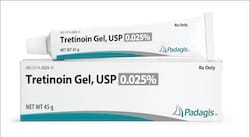
Navigating the digital pharmacy landscape can feel like wandering through a dense fog. You want the gold standard of skincare, but you also don’t want to get taken for a ride on pricing. Whether you are battling stubborn teenage breakouts or chasing that elusive youthful glow, the right platform makes all the difference in your skin’s journey.
Musely and Alloy are often the first names that pop up in skincare conversations. Musely tends to lean toward a highly customized approach, tailoring ingredients to your specific skin needs. It is a favorite for those who want a “bespoke” feel, though the customization often comes with a slightly higher price tag than your standard drugstore find.
Alloy, on the other hand, positions itself as a premium, streamlined option. They focus heavily on the science of the formula, providing a high-quality prescription experience that feels more like a boutique service. It is a solid choice if you prefer a polished, curated experience and don’t mind paying a bit more for that peace of mind and ease of use.
Ro takes a different path by integrating dermatological care into a broader wellness ecosystem. Their model is designed for convenience, making it incredibly easy to manage your prescriptions alongside other health needs. If you want a seamless, lifestyle-integrated approach to your skin, Ro is a heavy hitter in the telehealth space.
When it comes to your wallet, the distinction between acne-focused and anti-aging formulas is significant. Acne treatments often focus on high-frequency application and rapid clearing, whereas anti-aging formulations might include extra hydrating ingredients to combat the potential dryness of the retinoid. This “extras” factor is what often drives the price difference you see in your cart.
Subscription models are the name of the game in the world of telehealth. Most services will offer a discounted rate if you commit to a monthly shipment, which is great for consistency. However, always keep a sharp eye on the fine print; some companies make it a real headache to cancel, so read those terms carefully before you dive in.
If you are looking to keep things strictly budget-friendly, RedBox Rx is a breath of fresh air. They operate on a much leaner model, which keeps the costs significantly lower than the flashy, highly-marketed subscription brands. It is the perfect option for those who know exactly what they need and want to avoid the “fluff” of premium branding.
To help you make a quick decision, I have put together a breakdown of how these popular services compare in terms of cost and service structure.
| Service Provider | Primary Focus | Estimated Starting Cost | Model Type |
|---|---|---|---|
| Musely | Customized Skincare | $35 | Subscription |
| Alloy | Premium Rx Cream | $90 | Subscription |
| Ro | Wellness & Rx | $58 | Subscription |
| RedBox Rx | Budget Friendly | $20 | One-time/Subscription |
Choosing the right service is a bit like finding the perfect pair of jeans; it’s all about the fit. For more detailed advice on navigating these digital options, you can check out this guide on how to get tretinoin online to ensure you are making the most informed choice for your skin and your budget.
Stepping into the world of online prescriptions can feel like walking a tightrope without a net. You want the skin-clearing benefits of tretinoin, but you certainly don’t want to end up with a mystery cream that does nothing at all. Navigating this digital landscape requires a bit of savvy to ensure you are getting the real deal.
The journey typically begins with a telehealth consultation. Think of this as a digital version of your traditional clinic visit, but without the stale waiting room air. You will likely fill out a detailed medical history form, answering questions about your skin type, current breakouts, and any other health conditions. It is a vital step to ensure the treatment is safe for you.
Once your information is submitted, a licensed healthcare provider reviews your profile. Some platforms offer a video call, while others rely on text-based assessments. This provider’s job is to determine if 0.025% gel is the right starting point for your complexion. They aren’t just checking boxes; they are acting as your gatekeeper to ensure medical safety.
After the provider clears you, your prescription is sent to a pharmacy. If you are using a dedicated telehealth service, they often handle the pharmacy part for you. However, if you are using your own insurance, you might need to direct that prescription to a local or mail-order pharmacy to keep things moving smoothly.
Not all websites are created equal, and some “too good to be true” deals are major red flags. If a site offers high-strength tretinoin without asking a single question about your skin or medical history, run the other way. Legitimate online pharmacies are bound by law to ensure a proper consultation occurs before any medication is dispensed.
A safe way to verify a provider is to look for a physical address and a clear way to contact a real human being. You should also check if they are accredited by recognized boards. When in doubt, stick to well-known names or services that integrate with established healthcare networks. You can find more information on how professional health services operate through Walgreens virtual healthcare resources.
Always double-check the URL before entering your credit card information. Scammers love to mimic the look of famous brands to trick unsuspecting users. A tiny misspelling in the web address can be the difference between a secure transaction and a digital nightmare. It is better to be overly cautious than to regret it later.
Lastly, check for reviews on independent third-party sites. While a company’s own testimonials are great, they are often curated. Seeing what real people are saying on community forums can give you the “boots on the ground” perspective you need before hitting that “buy” button.
Once you’ve clicked purchase, the clock starts ticking. Shipping timelines can vary wildly depending on whether the pharmacy is local or shipping from a central warehouse. Some services might get your gel to your doorstep in three days, while others might take up to two weeks. It is a good idea to check the estimated delivery window before you pay.
Delivery costs are another variable that can sneak up on you at the checkout screen. While some premium services include shipping in their monthly fee, others might charge an extra $5 to $10 per shipment. Always look at the “total price” rather than just the monthly subscription cost to avoid any unpleasant surprises when the invoice arrives.
Consider the privacy of your package as well. If you are treating sensitive acne concerns, you might prefer a discreet, plain box. Most reputable telehealth companies ship your medication in unbranded packaging so your skincare routine remains your own business. It’s a small detail that provides a massive amount of peace of mind.
If you live in a remote area, be prepared for potential delays. It is often wise to time your orders so you have a “buffer” of a few days. You never want to reach the bottom of your tube only to realize your next shipment is stuck in a sorting facility three states away.
Most online tretinoin options are built on a subscription model. This is great for consistency—which is the secret sauce to seeing results with retinoids—but it can also become a financial leak if you aren’t paying attention. It is easy to forget you are being charged until the transaction hits your bank statement.
To manage this effectively, I recommend setting a calendar alert for your next billing date. This gives you a chance to decide if you actually need more product or if you have a surplus. Many services allow you to skip a month or pause your shipment, which is incredibly helpful if you’re traveling or if you’ve experienced skin irritation.
Be mindful of the cancellation policy. Some companies make it as easy as a single click to sign up, but a bit more of a chore to opt out. Read the fine print to see if you are required to give 30 days’ notice or if you can cancel immediately. Staying on top of these details keeps you in the driver’s seat of your skincare journey.
In the long run, a subscription is often the most cost-effective way to maintain your glow. By automating the process, you ensure you never skip a night, which is crucial for achieving those long-term anti-aging and acne-clearing benefits. Just stay diligent and keep a watchful eye on your monthly expenses.
Navigating the world of online skincare can feel like wandering through a minefield of varying price tags. You might find a simple tube of gel for a steal, only to realize the “subscription” has hidden fees. It is vital to look past the flashy marketing and dig into what you are actually paying for every single month.
When you strip away the bells and whistles, the cost-per-month breakdown usually falls into three distinct camps. You have the bare-bones options, the middle-ground telehealth services, and the high-end bespoke experiences. Understanding these tiers helps you decide if you are paying for the medicine or the convenience of the delivery service.
Budget-conscious shoppers often gravitate toward the $20 options found on discount pharmacy sites. These are often “no-frills” services where you provide your medical history, and they ship a standard generic gel. It is a practical choice if your skin is already accustomed to retinoids and doesn’t require a fancy delivery system.
On the other end of the spectrum, premium services can run upwards of $90 per month. These companies often bundle the prescription with a digital consultation, a sleek applicator, and high-quality moisturizing creams designed specifically to soothe retinoid-induced dryness. It is essentially paying a premium for a “white glove” experience that minimizes the guesswork.
If you are looking at the numbers, the difference between a budget provider and a premium one can be staggering over a year. A $20 monthly cost keeps your annual skincare spend at $240. However, a $90 service can push that total to $1,080, which might feel like a heavy pill to swallow for a single active ingredient.
| Provider Type | Estimated Monthly Cost | Primary Value |
| Budget-Friendly | $20 | Low cost, standard generic formula |
| Mid-Range Telehealth | $40 – $60 | Balanced care and ease of use |
| Premium Subscription | $80 – $100+ | Concierge care, specialized buffers |
Insurance coverage is the wild card in this financial equation. Many telehealth-first companies operate on a flat-fee model that bypasses insurance entirely to keep costs predictable. They argue this is often cheaper than the high copays and deductibles you might face at a traditional dermatologist’s office.
However, if you have a robust PPO plan, it might be worth checking if your provider accepts your insurance for prescription refills. Sometimes, a “cheap” $20 online service ends up being more expensive than a $15 insurance copay at your local pharmacy. It is worth a quick phone call to your provider before you commit to a long-term subscription.
Then there is the allure of custom-compounded formulas, which are a bit of a different beast entirely. Instead of a standard 0.025% gel, a compounding pharmacy might mix tretinoin with hyaluronic acid or niacinamide directly into the cream. It sounds like a dream for those with incredibly sensitive skin.
The value here isn’t just in the ingredients, but in the convenience. If you struggle with the “retinoid purge” or extreme peeling, a custom mix can act as a safety net. It delivers the active ingredient while simultaneously treating the irritation, potentially saving you money on expensive, separate moisturizers.
That said, don’t let the “custom” label blind you to the cost. Compounding is labor-intensive and typically carries a much higher price tag. You are paying for the pharmacist’s time and the specialized equipment required to blend these ingredients precisely. It’s a luxury, much like a custom-tailored suit versus a high-street alternative.
Ultimately, the best value is found where your skin meets your wallet. If you have “tough” skin that handles standard gels without much drama, stick to the $20 budget options. But if your skin is a temperamental diva, investing in a more sophisticated, perhaps compounded, formula might be the best money you ever spend on your face. For more on how these medications compare to other options, you can explore tretinoin over-the-counter options.
Stepping into the world of prescription-strength retinoids is like learning to ride a bicycle; there is a steep learning curve, and you might wobble at first. While the results can be nothing short of miraculous, the journey often involves a bit of a bumpy ride for your complexion. If you jump in headfirst without a plan, your skin might stage a full-scale protest.
The secret to success isn’t just about the gel itself, but how you introduce it to your daily routine. Many users find that the initial weeks are the most challenging as the skin adjusts to the increased cell turnover. Patience is your best friend here, as the “magic” happens beneath the surface through consistent, gentle application over several months.
Think of your skin as a garden that needs careful tending rather than a patch of dirt to be scrubbed. You wouldn’t dump a gallon of fertilizer on a seedling all at once, right? The same logic applies to 0.025% tretinoin gel. A little bit of strategy goes a long way in ensuring you get the glow without the dreaded redness.
If your skin is particularly temperamental, the “Sandwich Method” is an absolute lifesaver. This technique involves layering your products to create a protective buffer between your skin and the potent active ingredient. It acts like a soft cushion, slowing down the penetration of the tretinoin to minimize the risk of immediate irritation or intense peeling.
To execute this, you start with a thin layer of a gentle, hydrating moisturizer on damp skin. Once that has absorbed slightly, you apply a pea-sized amount of your tretinoin gel. Finally, you “seal the deal” with a second, slightly thicker layer of moisturizer. This creates a sandwich of hydration that keeps the active ingredient working without causing a flare-up.
This method is particularly effective for those who find that traditional application leaves them looking like they’ve been caught in a blizzard of skin flakes. While it might take slightly longer to see the full anti-aging or acne-clearing benefits, it is much better than being forced to stop use entirely due to extreme sensitivity. It’s all about the long game.
Using tretinoin without a support system is like trying to sail a ship in a storm without a rudder. You need specific ingredients to rebuild your skin’s natural barrier while the retinoid does its heavy lifting. Without these, you’re essentially inviting dryness and inflammation to the party, and they are guests that overstay their welcome.
First and foremost, you must prioritize ceramides. These are the natural lipids that act as the “mortar” between your skin cells. When tretinoin speeds up turnover, it can temporarily deplete these lipids, making ceramides essential for maintaining a healthy, intact barrier. A good moisturizer with this ingredient is worth every cent of a $30 to $50 investment.
Next, keep a bottle of hyaluronic acid nearby. This humectant is a thirsty ingredient that pulls moisture into the skin, helping to plump up the fine lines that tretinoin is working to smooth. Finally, never, ever skip the SPF. Tretinoin makes your skin incredibly sensitive to UV rays, so a broad-spectrum sunscreen is your non-negotiable daily armor.
For those looking to browse various options, you can see many different formulations and related care items by searching for tretinoin cream 0.025 online.
You might experience what dermatologists call “the purge.” This is a period where your acne might actually look slightly worse before it looks significantly better. As the tretinoin pushes deep-seated congestion to the surface, you might see an uptick in breakouts. It is frustrating, but it is actually a sign that the medicine is doing its job.
Flaking is another common companion during the first few weeks. It can feel like you have a localized case of dry skin that simply won’t quit. When this happens, resist the urge to use harsh physical scrubs or exfoliating acids like glycolic acid. Scrubbing at the flakes will only cause micro-tears and increase inflammation.
Instead, focus on “slugging” or using heavy, bland ointments on particularly dry patches if necessary. If the irritation becomes painful or leads to oozing, it is time to scale back your frequency. Sometimes, taking a few nights off to focus purely on hydration is the smartest move you can make for your complexion.
Tretinoin is strictly a nighttime resident. Sunlight can degrade the active ingredient, making it less effective, and the UV exposure mentioned earlier can lead to sun damage on sensitized skin. Create a ritual that signals to your body that it is time for repair and regeneration.
Begin by cleansing your face with a non-foaming, gentle gel cleanser. Ensure your skin is completely dry before applying the gel; applying tretinoin to damp skin can increase absorption too quickly, leading to more irritation. A pea-sized amount—no larger than a grain of rice—is all you need for the entire face. Avoid the delicate corners of your nose and the corners of your mouth.
Consistency is the bedrock of success. It is better to apply it twice a week every week than to apply it every night for three days and then stop for a week because your skin is angry. Start slow, listen to your skin’s signals, and gradually increase frequency as your tolerance builds over the coming months.
While tretinoin is often hailed as a skincare miracle, it is certainly not a “one size fits all” solution. Because this formula works by rapidly increasing cell turnover, it can be quite a handful for certain skin types. Using it when your skin isn’t up for the challenge is like trying to run a marathon without training; you’ll likely end up bruised and exhausted.
It is vital to recognize that this is a potent medical ingredient, not a casual cosmetic. Before you dive into the deep end of a retinoid regimen, you must ensure your body is actually prepared to handle the physiological shifts it triggers. Safety should always be your North Star when navigating the world of prescription-strength skincare.
If you are feeling hesitant, you might want to research how to get tretinoin online to see how professional consultations can help guide your specific needs. A doctor can determine if your skin’s barrier is robust enough to handle the initial onslaught of a high-strength gel or cream.
The most significant “no-go” zone involves pregnancy and nursing. Medical experts generally advise women who are pregnant or planning to become pregnant to steer clear of tretinoin entirely. There is a theoretical risk regarding Vitamin A exposure during fetal development, making caution the wisest policy for expectant mothers.
If you find yourself discovering a positive pregnancy test after you have already started your routine, don’t panic, but do act quickly. Contact your healthcare provider immediately to discuss your transition to a safer skincare routine. It is better to be safe than sorry when it comes to the delicate balance of hormonal health.
Breastfeeding mothers should also have a serious chat with their doctor before applying any retinoid. While topical absorption is often minimal, the standard medical advice is to err on the side of extreme caution. Your peace of mind and the safety of your baby are worth more than any anti-aging benefit.
If you live with active eczema, tretinoin might feel like throwing gasoline on a small fire. Eczema involves a compromised skin barrier, and adding a powerful exfoliant can lead to intense dryness, cracking, and even weeping skin. In these cases, the irritation usually outweighs any potential acne-clearing benefits.
Rosacea sufferers also need to tread carefully, as the redness and flushing associated with this condition can be severely exacerbated by retinoids. For those with highly reactive skin, the “purging” phase might feel more like a full-blown inflammatory event. It’s often better to master a gentle routine before introducing high-strength actives.
Sometimes, the line between “adjusting to the product” and “damaging your skin” is incredibly thin. If you have a history of chronic skin sensitivity, you might find that lower-strength over-the-counter retinol is a much more harmonious partner for your complexion than the heavy-hitting prescription gel.
It is crucial to distinguish between common irritation and a genuine allergic reaction. Irritation often manifests as redness, mild peeling, or a stinging sensation that subsides once you apply a heavy moisturizer. This is often just your skin’s way of saying it needs to slow down and catch its breath.
An allergic reaction, however, is a different beast entirely. If you experience swelling, hives, or intense itching that doesn’t go away, your body is signaling a true intolerance. Unlike standard purging, an allergy is an immune response and requires immediate attention to prevent further complications or widespread discomfort.
If you experience any of the following symptoms, stop use and consult a doctor immediately:
You shouldn’t wait until your face is a bright shade of crimson before seeking professional advice. If the redness is accompanied by extreme tenderness or if you notice any unusual bumps that don’t look like typical acne, it’s time to call it quits and call your doctor. Sometimes, a little professional intervention can save you months of discomfort.
Many people assume that if they aren’t in visible pain, everything is fine. However, if you notice a significant change in how your skin reacts to your “safe” products—like a moisturizer that used to feel soothing now feels like sandpaper—your skin barrier might be compromised. This is a subtle warning sign that you should not ignore.
A dermatologist can help you navigate the “sandwich method” or suggest a tapering schedule to help your skin acclimate. If you are unsure about the legitimacy of a source or the safety of a specific formulation, always verify through a licensed medical professional to ensure you are getting the real deal for your money.